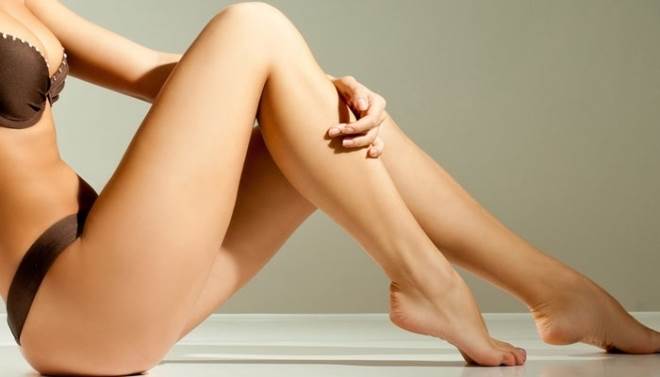
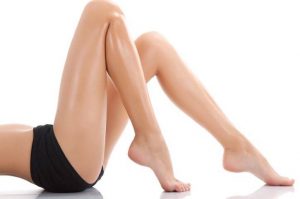
Most women who are planning the leg aesthetics have complaints that their legs are too thin or crooked and they are afraid of wearing skirts. It is not possible to enlarge the leg muscles at the desired level, even with intense exercise. The muscle behind the leg is two-headed. One head lies on the upper inner edge of the leg and the other head extends to the upper outer edge of the leg. However, if the muscles are weak and the fat in the leg is low, the leg may appear crooked or slender. In order to correct this condition, prosthesis, oil injection or ready-made fillers such as macrolane and aqualift can be applied on the leg. These methods are applied to increase the fullness and shape of the leg.
- Filling material injection leg aesthetics; The most commonly used fillers are hyaluronic acid fillers such as hyla-corp or macrolane. Average retention times are 2 years. The Aqualift filler provides 5 years of retention after injection. Since there is no operation, the biggest advantage of these fillers is that the results can be seen immediately without a recovery period. Patient can continue his/her normal life the same day. But as the desired fullness increases, the price of the application increases naturally. Usually 100 ml application into each leg provides a satisfactory fullness. The biggest disadvantage is that they are not permanent.
- Leg aesthetics with stem cell fat injection; Stem cell fat transfer must be done in the hospital. Anesthesia procedure varies according to the volume of fat tissue to be transferred. Most of the time, local anesthesia or sedation accompanied by local anesthesia can be used. Fat tissue taken from excess fat areas of the body is separated by a series of processes and 300 ml of pure fat tissue stem cells can be isolated. With stem obtained, fat is injected inside the legs. 60-70% of the injected fat is permanent. If this fullness is less than the desired fullness, a re-injection of fat may be required.
- Leg prosthesis and leg aesthetics; Leg prosthesis application provides both the fullness of the desired size and a permanent result. Leg prostheses may be of symmetrical or asymmetric structure, made of silicon, and of various sizes and volumes. The prosthesis can be placed either on the inner side of the leg or on both sides, depending on the individual's preference. Leg prostheses are usually placed on the inside of the leg bilaterally. Generally, prosthesis selection is made according to the person's leg length and leg size. I usually prefer asymmetrical prostheses. The upper part of these prostheses are plump and they get thinner when they go down toward the ankles. In this way, the patients would have gained the inner leg and calf fullness that they had complained before.
Calf prostheses can be performed in hospital under general anesthesia or local anesthesia supported with sedation. The operation takes approximately 1 hour.
To place the leg prostheses, a plan is opened between the leg muscle and the muscle sheath with the help of a small incision made from the fold trace behind the knee. In this plan, to put the prosthesis, a suitable place is created. After placement of the prosthesis, the muscle fascia and skin are closed. Patient is given either varsity socks or elastic bandages.
After the surgery, the legs are closed with elastic bandages. Resting at home and leg elevation are recommended. In the first days it is recommended to get up only for personal needs. The return to normal can take up to 2 weeks. With aesthetic surgery, it is possible to obtain smoother and aesthetically pleasing legs.