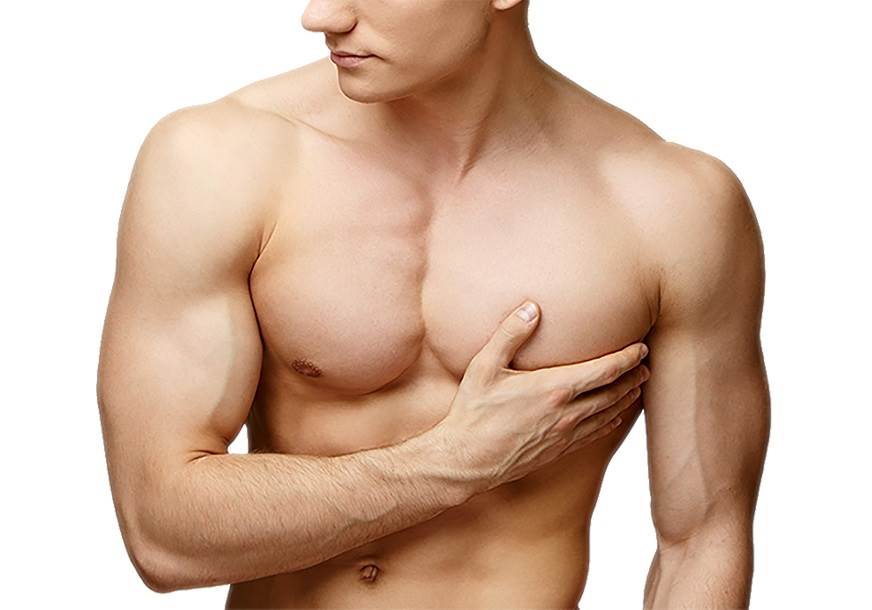
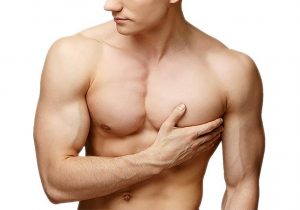
 Gynecomastia often occurs when the level of estrogen (female hormone) in the body increases and testosterone levels decrease. This occurs physiologically in infants, teenagers and the elderly. Gynecomastia is observed in 40% of teenagers and 35% of older men. The majority of adolescent gynecomastia disappears within a few years. Apart from this, gynecomastia can be observed in various hormone disorders, in some types of cancer, especially lung cancer, and in systemic diseases such as AIDS. Various heart medications, cancer drugs, hormone-containing drugs and drugs can also cause gynecomastia.
Due to obesity and the mammary gland without growth in the breast due to the great appearance of the breast is called a false gynecomastia. False gynecomastia is also a common problem.First, the reason for gynecomastia should be understood. If the patient is thought to have a hormone disorder, he/she is first evaluated by an Endocrinologist. Hormone tests are performed. If there is a disorder, it is treated accordingly. In adolescent gynecomastias which are seen during the puberty period, the best thing to do is to wait . Most of them recover within a few years. Gynecomastia other than these can be corrected by surgical procedures. In the majority of patients with gynecomastia it is possible to obtain sufficient results with liposuction alone. If this is not enough, the breast tissue is removed with a short incision around the nipple. In patients with excess skin and nipple, the skin is removed so that the mark remains around the nipple. Care is taken to not to leave any other marks on male patients unless it is neccessary. Gynecomastia surgery is performed under general anesthesia and in the operating room. It takes 1-2 hours depending on the operation to be performed.3 hours after the end of the operation, patients can eat and stand up. Usually 6 hours later, patients are discharged from the hospital. Patients have a small medical dressing in the incision or liposuction holes, if they have any. A special corset is required for 2 weeks due to liposuction. They can take a bath in two days. Three days later, they can go to the check up and return to work and start their normal daily activities; They can even drive a car. The first 3 weeks they should not do sports other than walking. They can do all sports activities except arm and chest movements after the third week. After the sixth week, all kinds of sports activities are free. The first days after the surgery, the breasts are edematous and hard, there may be bruises. The bruises fade away at the end of the first week. Swelling and stiffness are evident in the first 3 weeks. After the third week, swellings regress rapidly. The breasts take their exact form only in the third month. In order to accelerate the progression of edema, procedures such as lymphatic resection, radiofrequency can be performed after the third week. Subsequent checks are performed at 3 weeks, 3 months, 6 months and at the end of the first year unless there is a special case. Gynecomastia operations are generally problem-free and satisfying procedures. Prolonged swelling of the first months may make patients nervous, but they are often temporary. The most common problem in the long term is that the process' not reducing the breast sufficiently. In these cases, a second procedure may be required. Another problem that may be encountered is the irregularities that may occur after liposuction. Depression and fluctuations may occur, but with good planning and rigorous surgery, such problems can be minimized.